2026 Main harvest · Now samplingOrganically grown · No synthetic inputs10 acres · 1,200m · Muhoroni, KenyaDirect import to US roasters2026 Main harvest · Now samplingOrganically grown · No synthetic inputs10 acres · 1,200m · Muhoroni, KenyaDirect import to US roasters
For roasters · 2026 harvest

Sourcing single-origin Kenya without a broker chain in the middle is harder than it should be. We grow ten acres in Muhoroni and ship direct to US roasters.

● Harvest live
Muhoroni · 15:32 EAT

Green coffee

grown the
long way
around.

We don’t roast. We grow. Ten acres in Muhoroni, Kenya: no synthetic chemistry, no shortcuts. Hand-picked cherries, double-washed at our own mill, dried on raised beds, exported direct to roasters who give it the finish it deserves.

Practice
& progress

What you can verify on the farm today, and the audits we’re working toward.

What we do today
  • Zero synthetic pesticides
    Three generations, no exceptions
  • Compost from cherry pulp
    100% of pulp returns to soil
  • Native shade canopy
    38% cover · Mukau + banana
  • Mill water recycled
    94% closed-loop · zero effluent
Where we’re heading
  • USDA Organic certification
    Application opens Q3 2026 · target 2027 harvest
  • Independent agronomy + soil-lab reports
    Lot-specific reports available with samples today
§01 · the soil comes first

An organic
farm, first.
A coffee estate second.

Coffee is an extractive crop. Most farms strip their soil, douse it with nitrogen, spray for leaf rust, and move on. We took the other road. Every decision on our ten acres is measured against one question: does the land leave this season healthier than it started?

01
0 kg / acre
Industry avg: 2.4
No synthetic pesticides

Three generations of no synthetic chemistry. Pests managed through shade canopy, intercropping, and biology. Only USDA-Organic-approved sprays when treatment is needed.

02
100% of pulp
Typical: 0%
Compost, not fertilizer

Every cherry pulp and husk goes back as compost. What the coffee took out, we put back, by hand.

03
38% canopy
Sun-grown: 0%
Shade-grown under native canopy

Slow growth under Mukau and banana yields denser beans, deeper sugars, and habitat for the birds that handle pests for us.

04
94% recycled
Industry avg: 12%
Water closed-loop

Mill water cycles through settling ponds and reedbeds. Zero effluent reaches the Nyando river.

See the full scorecard ↓

§02 · the numbers

Claims are cheap.
Numbers aren’t.

Synthetic pesticides applied
0 kg / acre
Industry avg: 2.4 kg
Synthetic fertilizer applied
0 kg / acre
Industry avg: 180 kg
Water recycled at mill
94%
Industry avg: 12%
Native tree canopy cover
38%
Sun-grown: 0%
On-farm compost returned to soil
100% of pulp
Typical: 0%
Workers on living wage
Living wage
Kenya coffee avg: 31%
Carbon sequestered per acre
4.2 t CO₂ / yr
Conventional: −1.1 t

Self-reported, with every input logged. Lot-specific soil panels, processing records, and independent agronomy reports available on request for roasters evaluating our lots.

§03 · the offering

Two ready.
Two on the
way.

Every lot ships as unroasted green coffee in 60kg GrainPro-lined jute bags. Full traceability documents, certificates, and a 200g sample roast accompany every order. Minimum 10 bags for direct import; smaller allocations available through our NC warehouse.
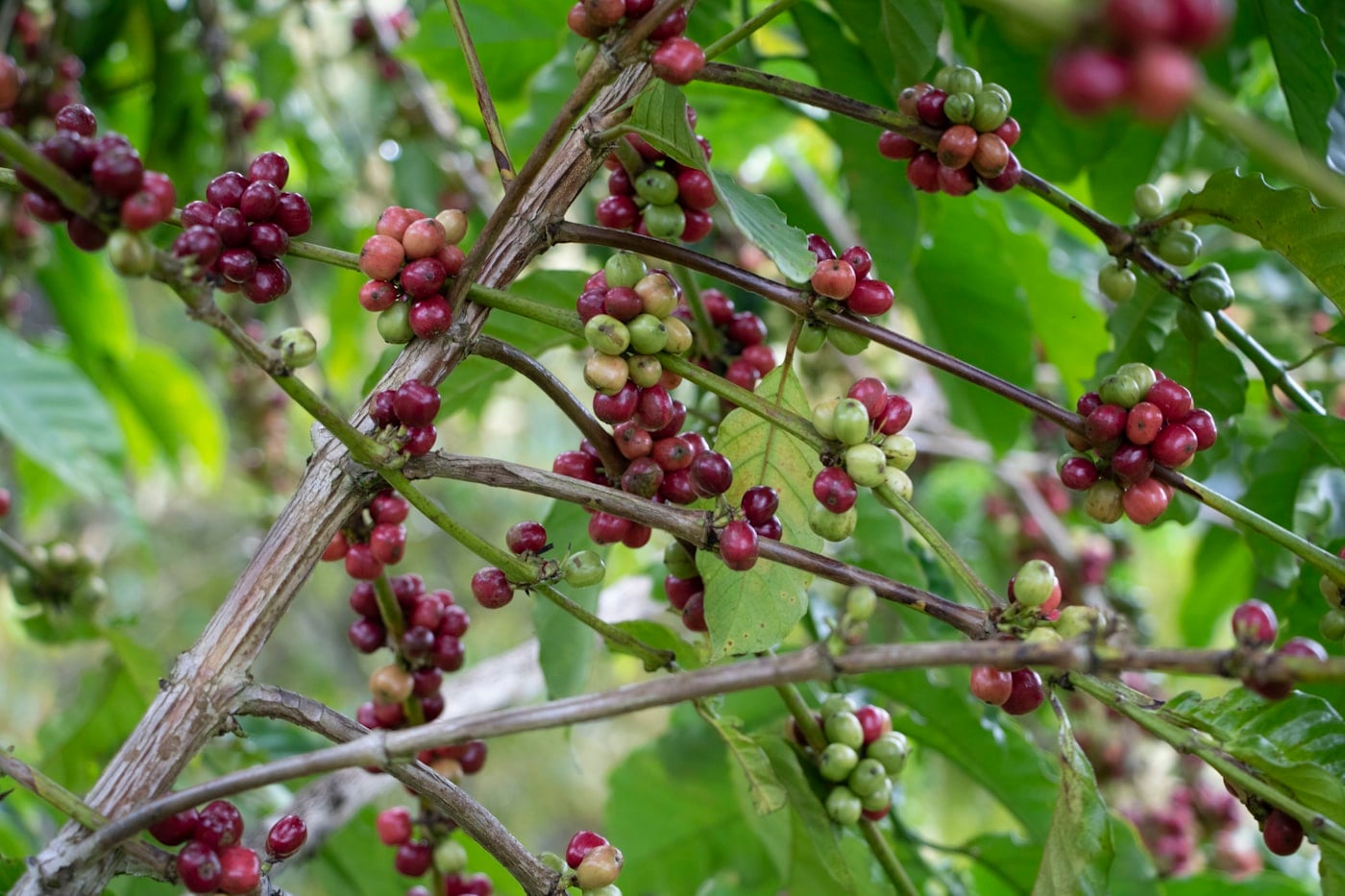
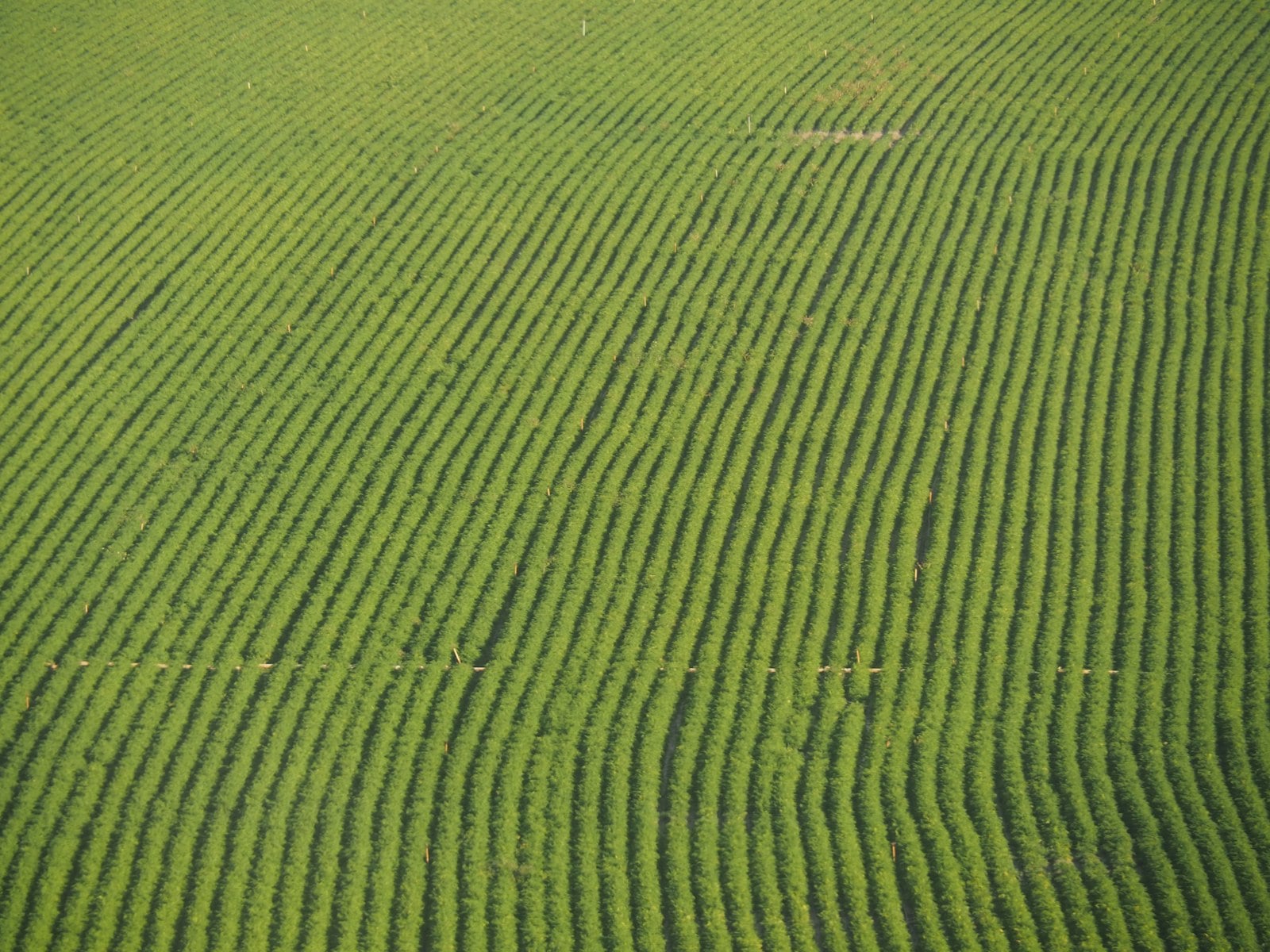
Sampling now · 2026 main harvest

On the calendar

Community Blend · Carefully sourced · Smallholder neighbors
Projected
Lot 2027-CB

Community Blend

Carefully sourced · Smallholder neighbors
Projected · Mid 2027
Ex-Mombasa · Unroasted
Reserve allocation →
Batian AA · Single varietal
Projected
Lot 2028-BA

Batian AA

Single varietal
Projected · End 2028
Ex-Mombasa · Unroasted
Reserve allocation →
Sample kit for qualified roasters: 200g of both 2026 lots with full traceability docs, shipped free to US roasters evaluating our 2026 harvest.
Request the kit →
§04 · tree to port

Eight steps. All of them ours. Then we hand it to you.

01
Cultivate

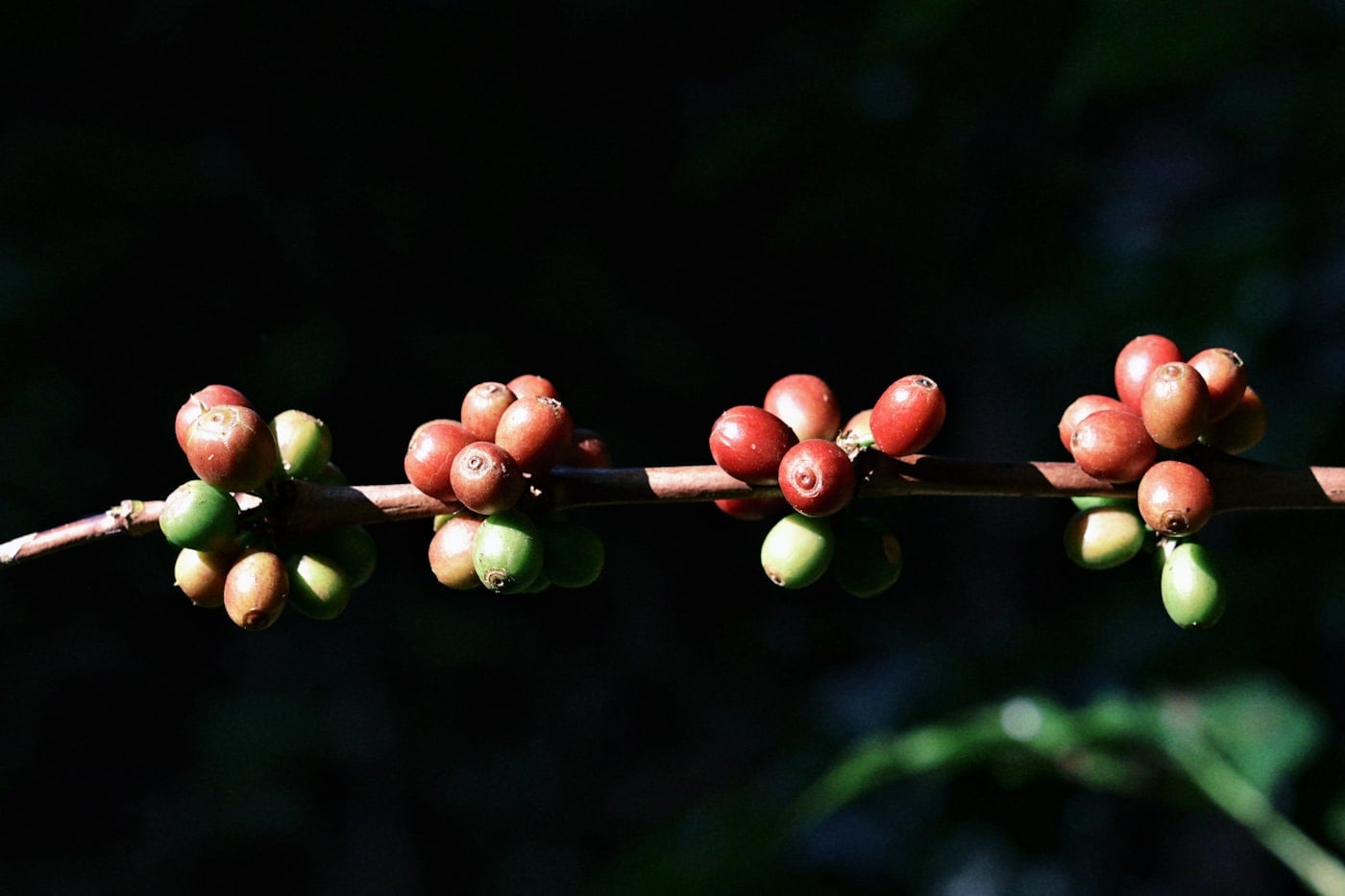
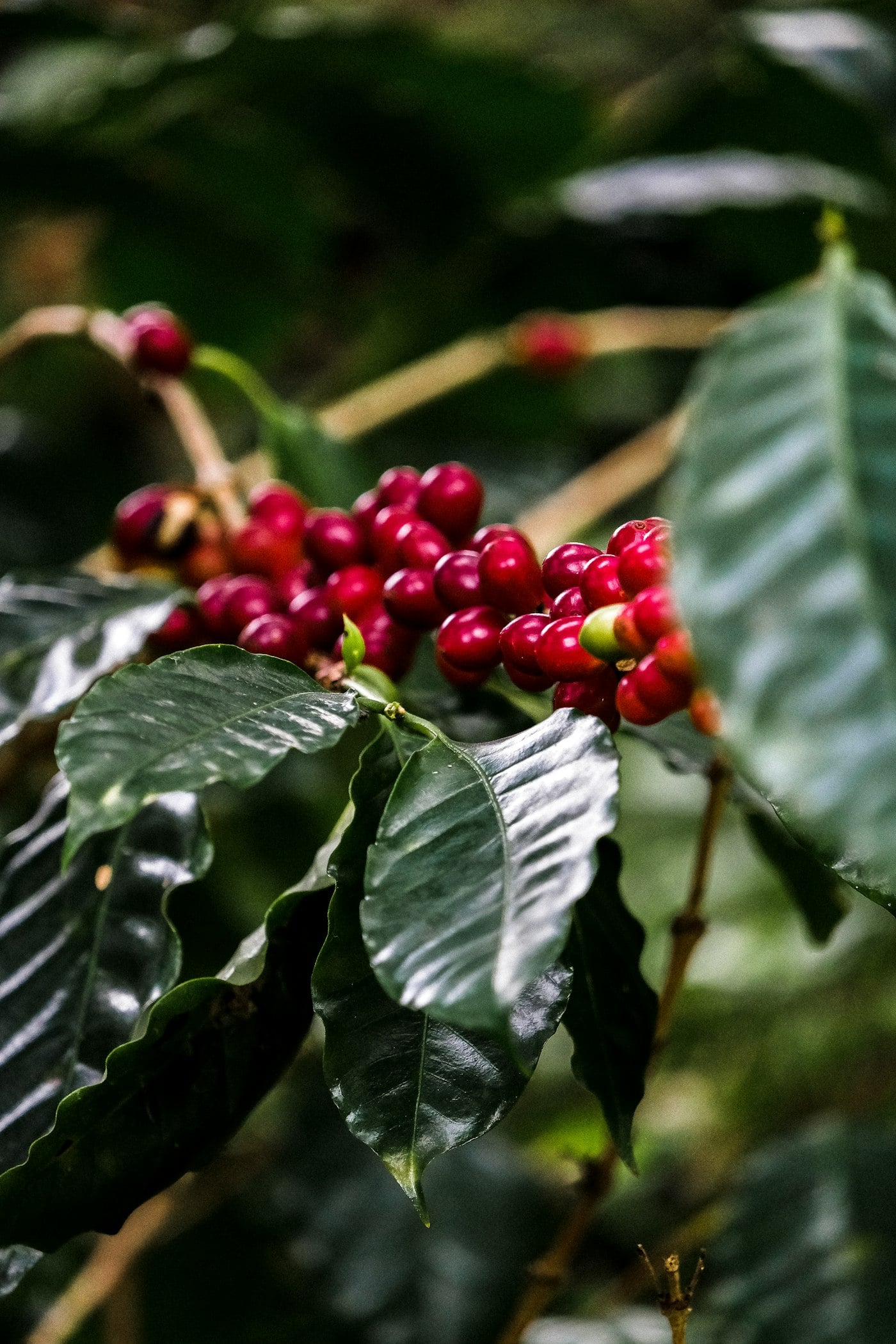
Shade-grown under native canopy. No synthetic inputs. Intercropped with banana and legumes for soil nitrogen.
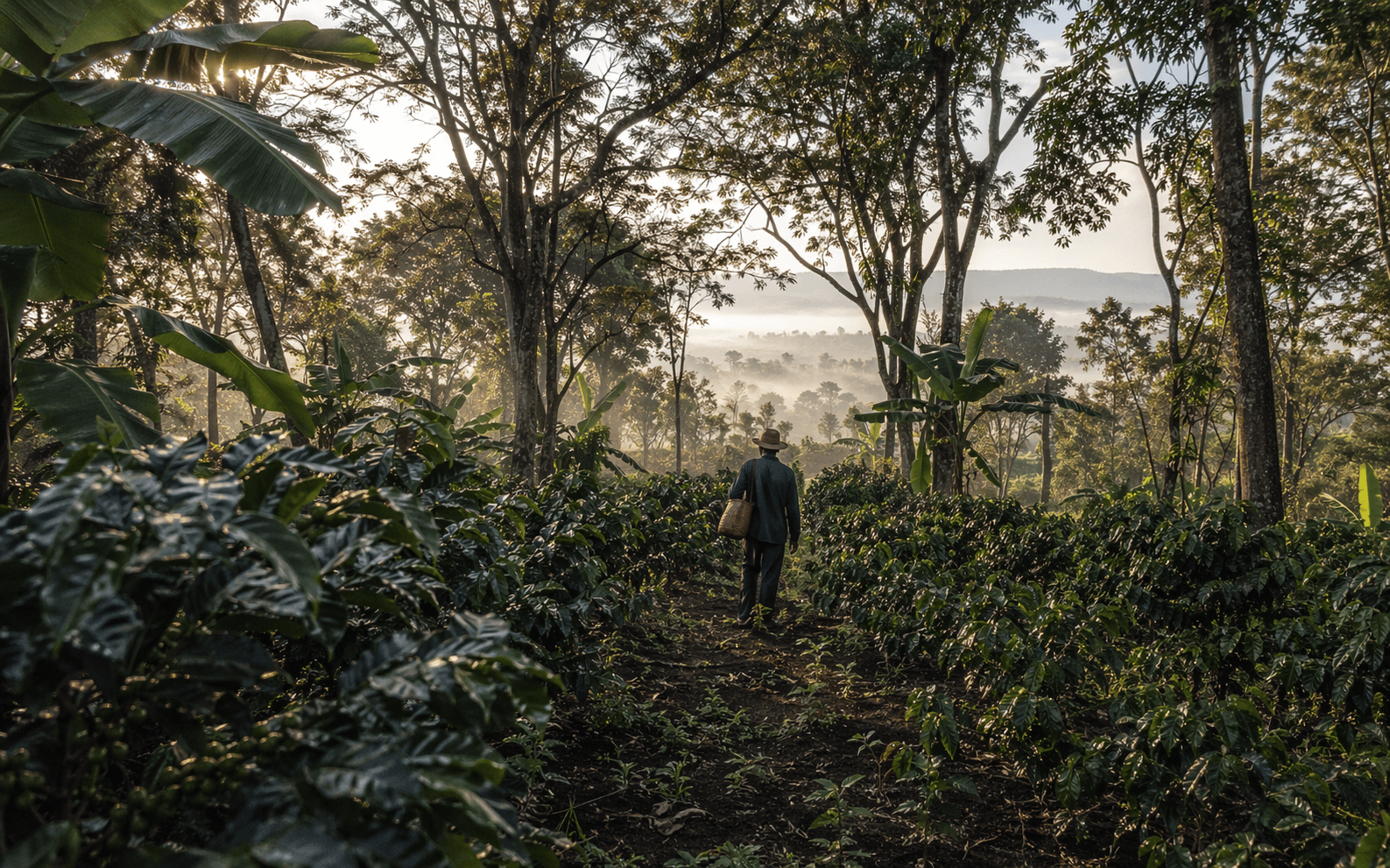
Cultivate · step 01
Cultivate
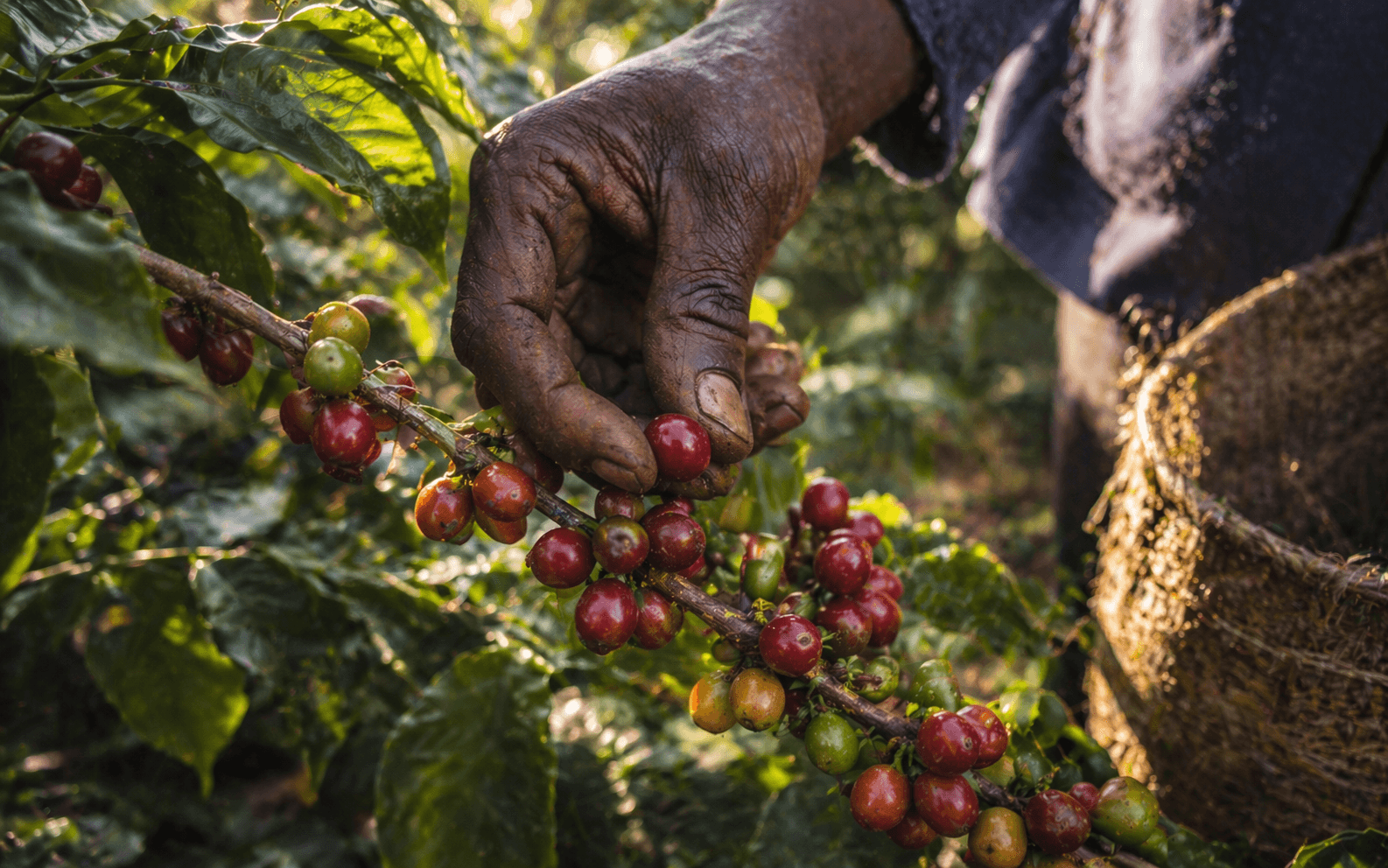
Harvest · step 02
Harvest
02
Harvest

Selective hand-picking, cherry by cherry, at peak ripeness only. No strip-picking.

03
Pulp

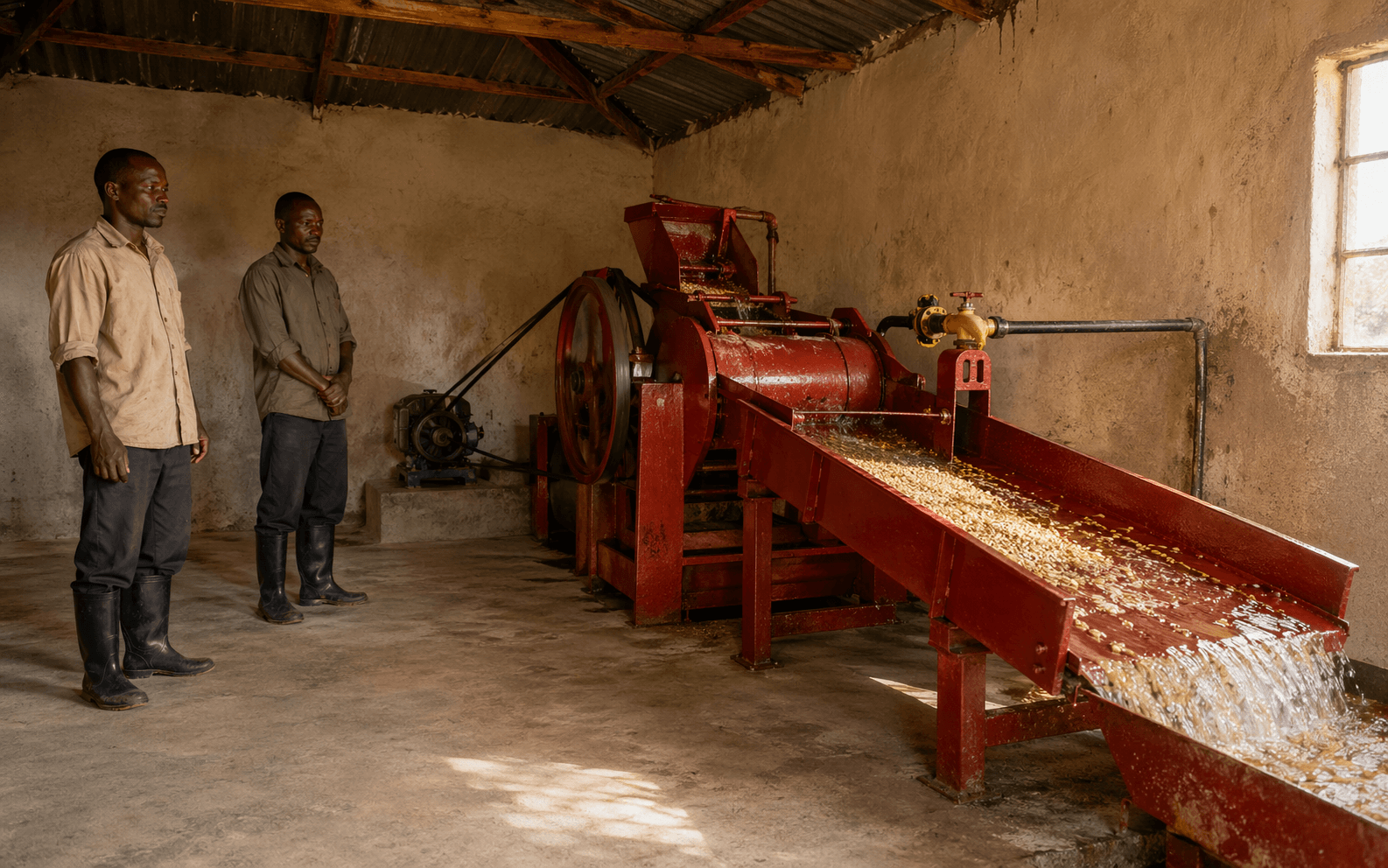
Cherry skin removed by disc pulper within 6 hours of picking. Pulp returns to the soil as compost.
Pulp · step 03
Pulp
Ferment · step 04
Ferment
04
Ferment

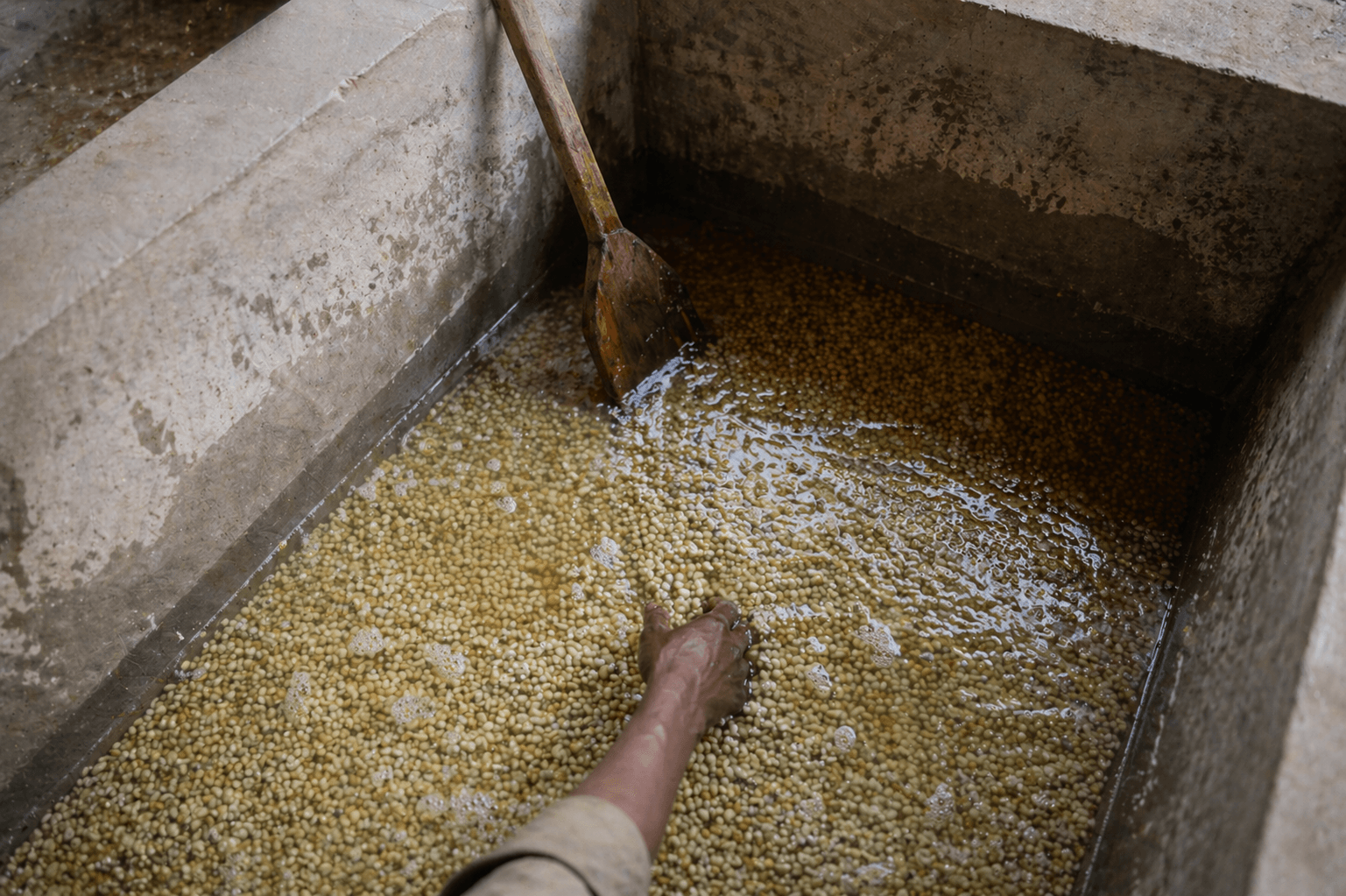
12–24h primary dry fermentation. Traditional Kenyan double-wash method.

05
Wash

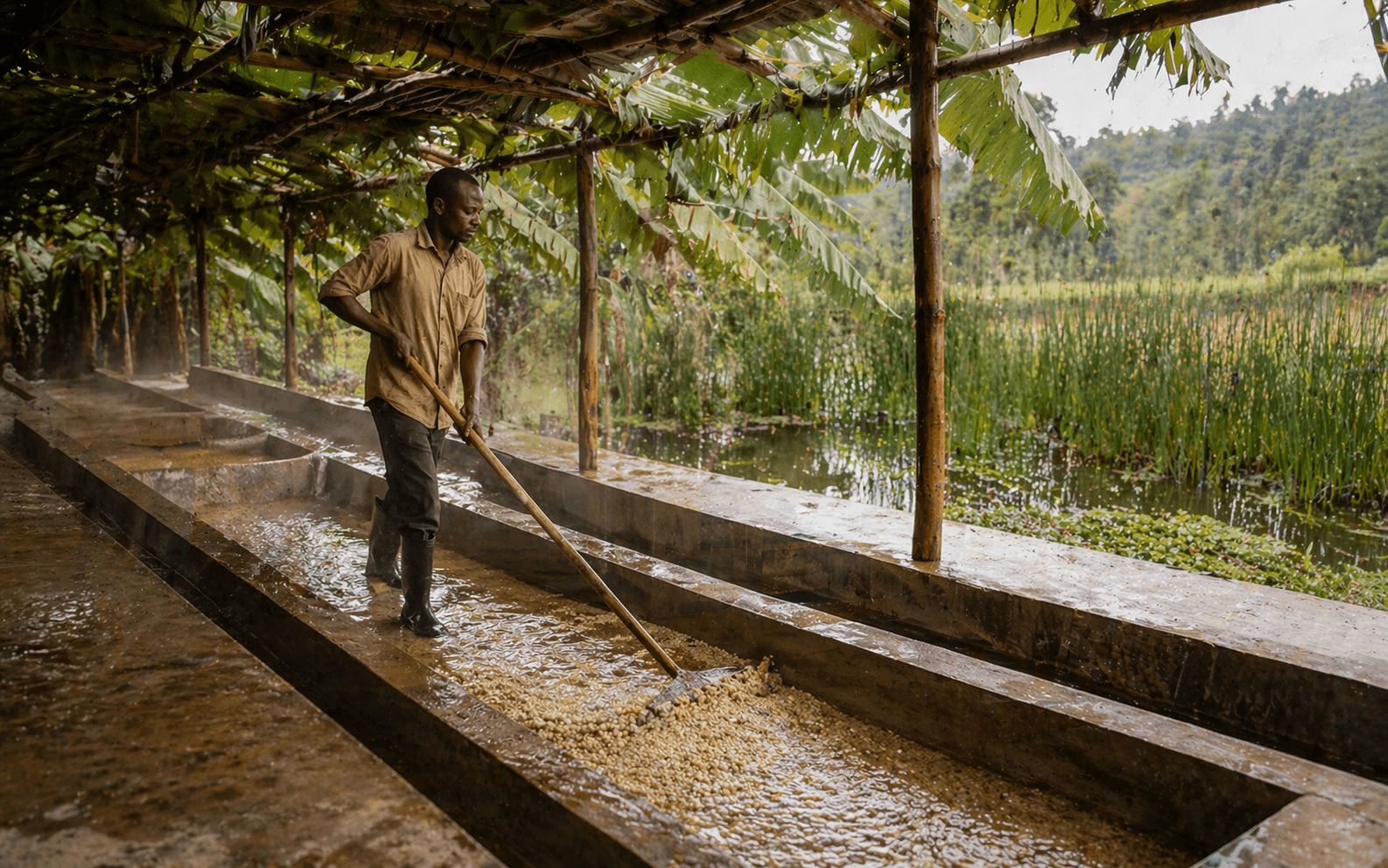
Mill water recycled through reedbeds. Zero effluent leaves the property.
Wash · step 05
Wash
Dry · step 06
Dry
06
Dry

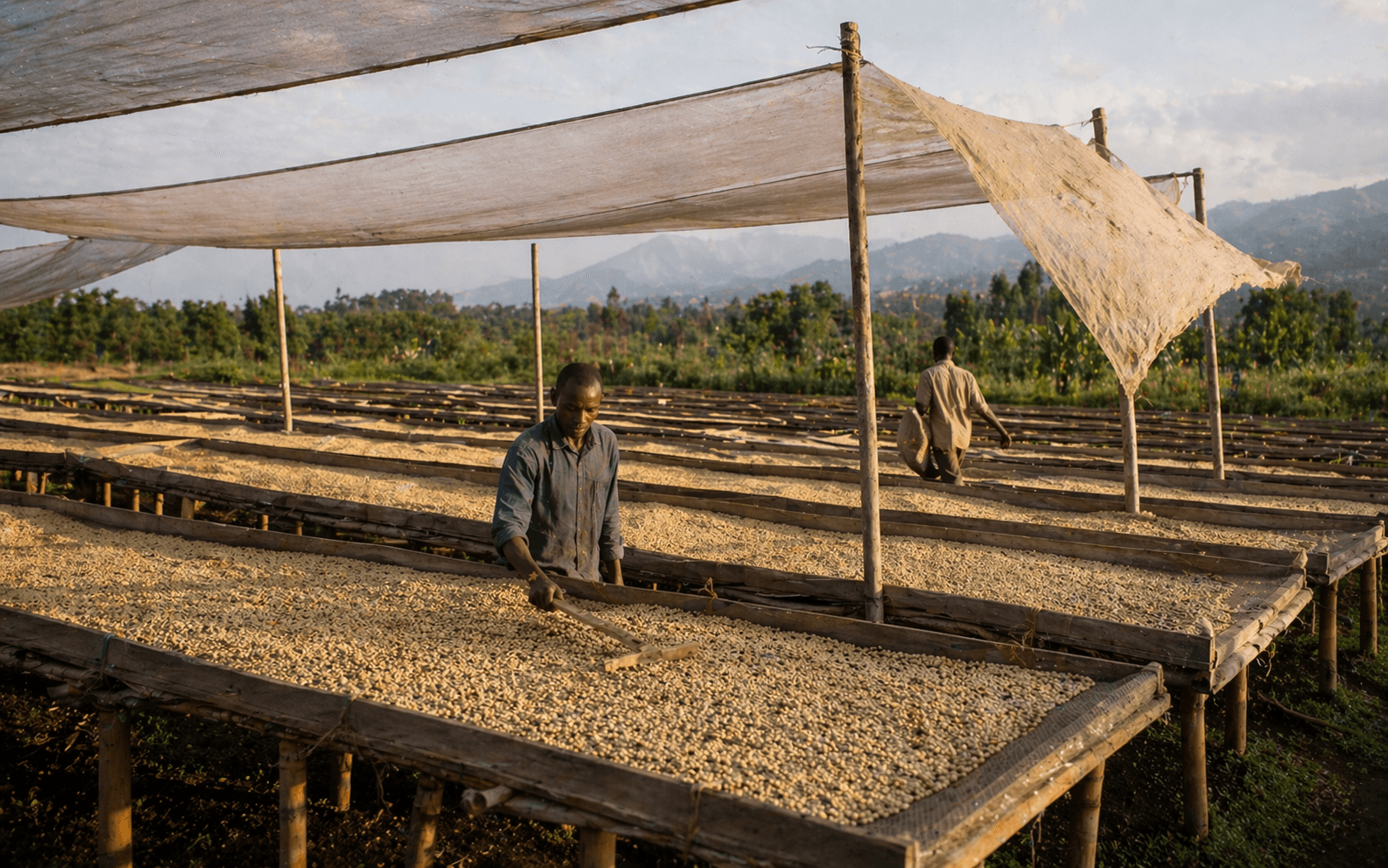
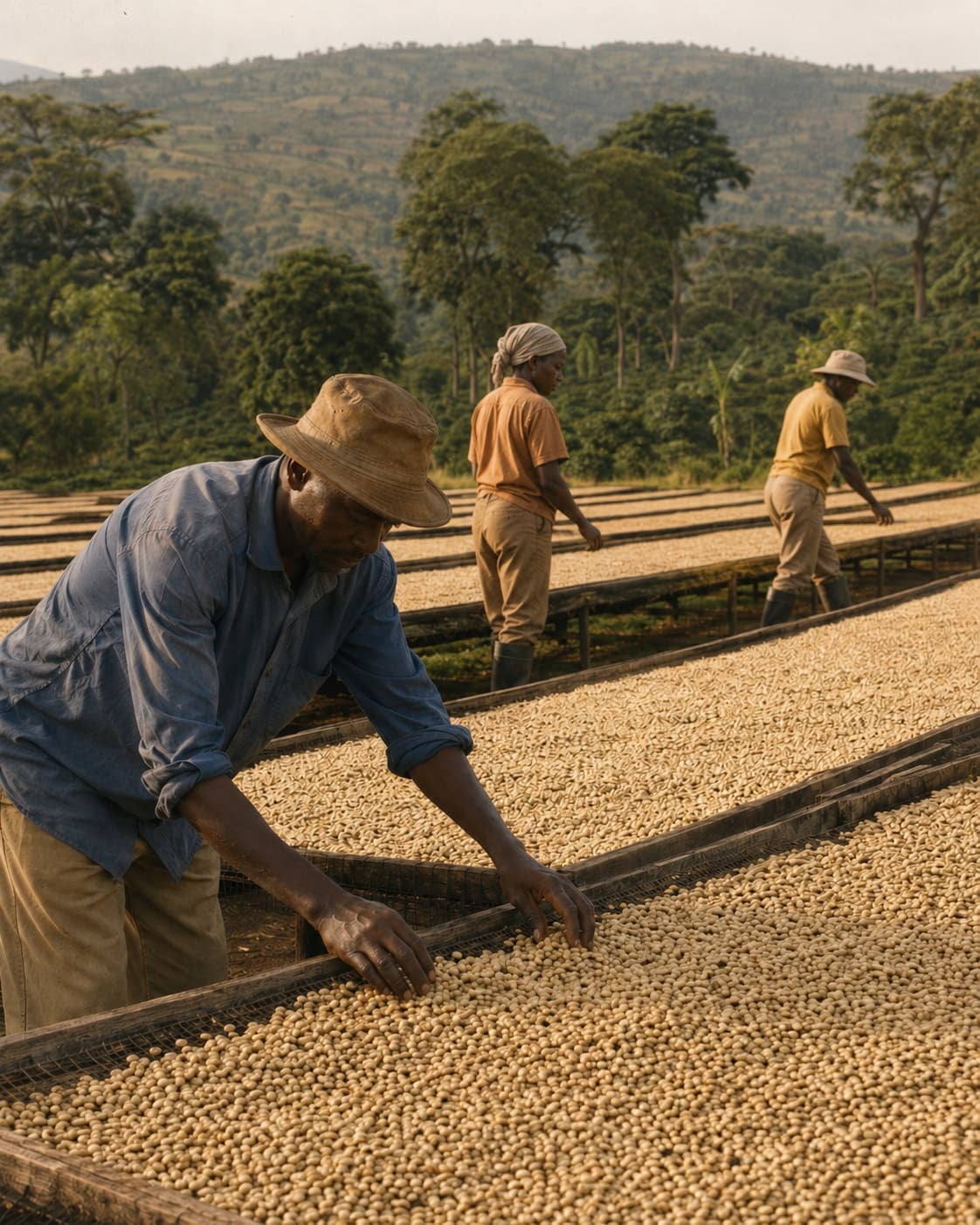
12–21 days on raised African beds under shade cloth. Turned by hand every two hours.

07
Mill & Grade

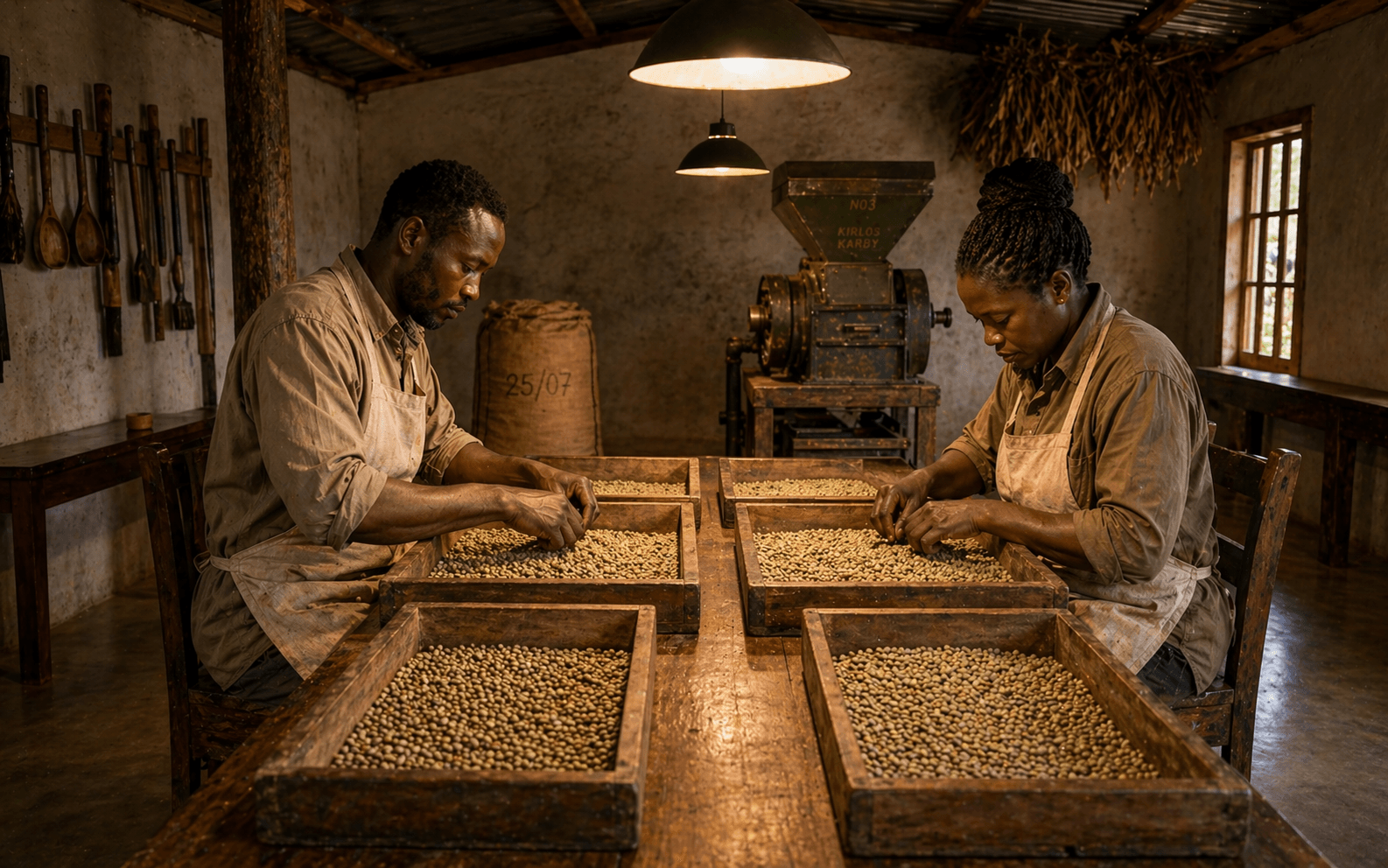
Hulled, sorted, and graded on-farm to AA, AB, or PB. Hand-picked defects.
Mill & Grade · step 07
Mill & Grade
Export · step 08
Export
08
Export

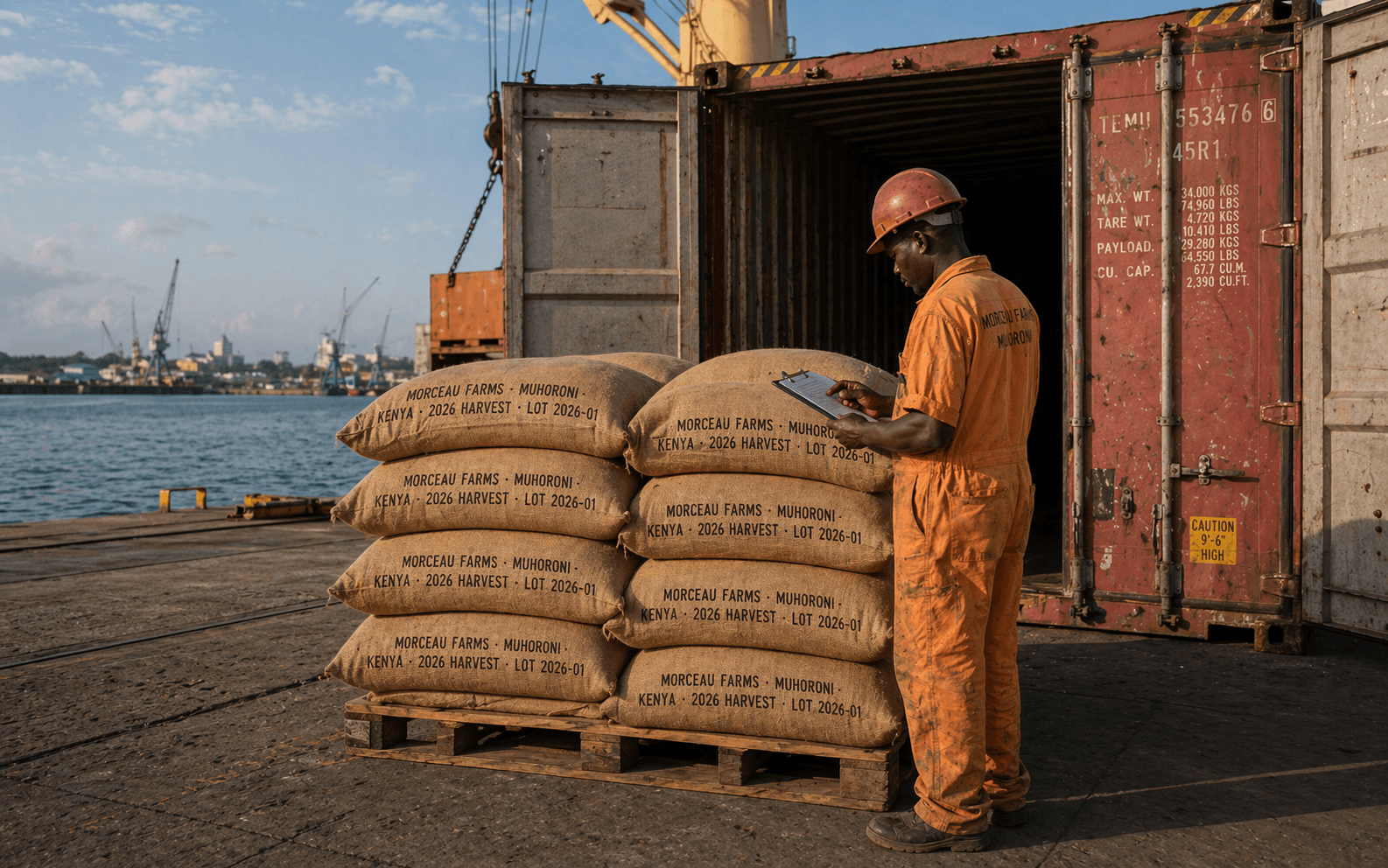
GrainPro-lined jute bags. Mombasa → US East Coast. Lot-specific docs ship with every container.

Step 09 →
Your roastery.
We don’t roast. That’s the craft we leave to the specialists who buy from us: the independent roasters across the United States who know their market, their customers, and their machines better than we ever could.
§05 · the terroir

What Muhoroni
tastes like.

Volcanic soil. Equatorial warmth. Lake Victoria basin at 1,200m. Biodiverse shade from native Mukau and banana. These are the variables your roast profile gets to work with.
Soil
Volcanic
Elevation
1,200m
Shade cover
38%
Varietals
Batian · Ruiru 11 · SL-28
LAKE VICTORIAESTATEMorceau10 ACRES · 1,200MKISUMUMUHORONIN0 · 5 · 10 KM
0.1542°S · 35.1997°E
Morceau Farms · the crew at work in Muhoroni
Muhoroni, Kenya
● The crew
§06 · the crew

A small crew.
Ten acres.

A small crew runs ten acres. Pickers at peak harvest. The mill operator. The drying-bed crew who turn cherries every two hours through twelve-day cycles. They’re on year-round contracts at a living wage. The rest of Kenya’s coffee belt runs on seasonal piecework.

When you buy from Morceau, that’s where the money lands. No broker, no co-op cut, no marketing layer. Put this on your menu and your customers can read the chain from picker to cup.

Contracts
Year-round
Wage floor
Living wage
§07 · for roasters

How we work
with independent
roasters.

Full import
Direct container

20+ bags, direct to your loading dock. FOB Mombasa or landed at our Norfolk, VA warehouse. Full chain-of-custody docs. Best unit economics.

For: Established roasters, wholesale-heavy operators.
Shared container
Split allocation

5–20 bags from our NC warehouse. You pick the lot, we handle the logistics. Short lead time, no import hassle.

For: Growing roasters, single-cafe operations.
Reserved lots
Seasonal allocation

Lock your 2027 harvest now. We set aside named bags from specific micro-lots before they hit the general offer sheet.

For: Roasters building long-term origin relationships.
Indicative pricing
FOB Mombasa or landed Norfolk, VA. Lot-specific pricing on request, aligned with top-grade Kenyan AA. Adjustments for cupping score, lot size, and shipping terms.
Request offer sheet →
§08 · the paper trail

Every claim,
documented.

Organic is a cheap word. The paperwork is what makes it real. Your QC lead gets cupping scores, processing logs, soil tests, and full chain of custody with every sample we ship.

What’s in the dossier
  • Cupping Sheet
    Independent grader's notes, added once the lot is scored
  • Processing Log
    Pick date through drying, signed by the mill supervisor
  • Soil & Input Report
    Annual soil-lab analysis, every input on record
  • Soil & Sustainability Scorecard
    Cover crop, shade canopy, water and carbon per kilo green
  • Chain of Custody
    Every container and transit leg from Muhoroni to your dock
Lot-specific. Updated each harvest.
Request the dossier →
§09 · plan your year

Harvest runs on Kenya’s clock.

Two rains, two harvests, twelve months of work. The main crop ships in spring; the lighter fly crop arrives at the end of summer. Plan your roasts to the season, not the catalog.

  • Main harvest · ships Mar–Apr · ~78% of yield
  • Fly crop · ships Sep · brighter, lower body
  • Flowering · rain-led, no shipments
JANFEBMARAPRMAYJUNJULAUGSEPOCTNOVDECMorceau FarmsMUHORONI, KENYA
2026 harvest · now offering

Roast your next
Kenya.

Three steps to a sample on your cupping table.

01
Request a sample kit

Tell us your roastery. We ship 200g of all three lots with cupping sheets.

02
Cup the lots, read the dossier

Soil panels, processing logs, and chain of custody land in your inbox.

03
Open your allocation

Lock bags before the next vessel out of Mombasa.

We’d rather work with ten roasters who know our soil than a hundred who don’t.

Request

Start with
samples.

Tell us your roastery, your volume, and what you’re looking for. We’ll ship a 200g sample kit with the full 2026 offer sheet and lot-specific traceability docs attached.

Free for active US roasters. We pay shipping. No obligation if the cup doesn’t deliver.

Roasters

roasters@morceaufarms.com

General

hello@morceaufarms.com

Mailing Address

Morceau Farms LLC
964 High House Rd #3024
Cary, NC 27513
United States

Farm

0.1542°S · 35.1997°E · Muhoroni, Kenya